Stablecoins are carving out a critical niche in the rapidly evolving financial technology landscape. Acting as a bridge between volatile cryptocurrencies and stable fiat currencies, stablecoins have been positioned as the future direction for digital assets. This article explores their impact on traditional banking systems and what this signifies for the financial world.
The growing prominence of stablecoins like Tether (USDT) and USD Coin (USDC) has been driven by their ability to maintain a stable value relative to a specific currency, usually the U.S. dollar. Unlike other cryptocurrencies prone to extreme volatility, stablecoins offer a semblance of stability, making them appealing for transactions and savings in the digital realm. This quality has had a profound effect on traditional banking systems, challenging their historical monopoly on currency management.
Traditional banks have long provided the services of currency storage, transfer, and lending. With stablecoins, these services are increasingly being provided by decentralized platforms, creating a competitive landscape. Financial experts have noted an increasing number of consumers utilizing cryptocurrencies for transactions, bypassing conventional banking systems altogether. This shift indicates a possible reduction in the dependency on banks for domestic and international transactions, impacting their revenue streams. Moreover, with stablecoins facilitating instantaneous cross-border transactions at lower fees, remittance services provided by banks face significant disruption.
On the regulatory front, traditional banks are urging for a strengthened regulatory framework governing cryptocurrencies, particularly stablecoins, to ensure consumer protection and the stability of financial systems. Despite their fluctuating nature, cryptocurrencies have drawn investments and attention that bankers cannot ignore. As such, many banks are investigating partnerships with stablecoin platforms to expand their digital financial services.
Moreover, there is a prevailing concern related to the potential for stablecoins to destabilize financial markets. Without proper regulation, there is a risk that wide adoption may lead to a substantial shift of deposits from bank accounts to digital wallets, undermining the banks' ability to lend and manage liquidity effectively.
Reflecting on my experience in major accounting firms and closely observing industry shifts, I recall the likes of Goldman Sachs branching into digital assets, setting an example of adaptive strategy to include stablecoins in their portfolio. Such allows firms to remain competitive in an environment where digital innovation directly impacts consumer habits and expectations.
The race to integrate stablecoins within traditional financial systems is on. It is a race that calls for robust regulatory frameworks, innovative adaptation from banks, and educated consumer participation. As stablecoins continue to rise, the future of traditional banking will undoubtedly be influenced heavily by their presence, reshaping the financial ecosystem as we know it.
The Impact of Stablecoins on Traditional Banking Systems Featured
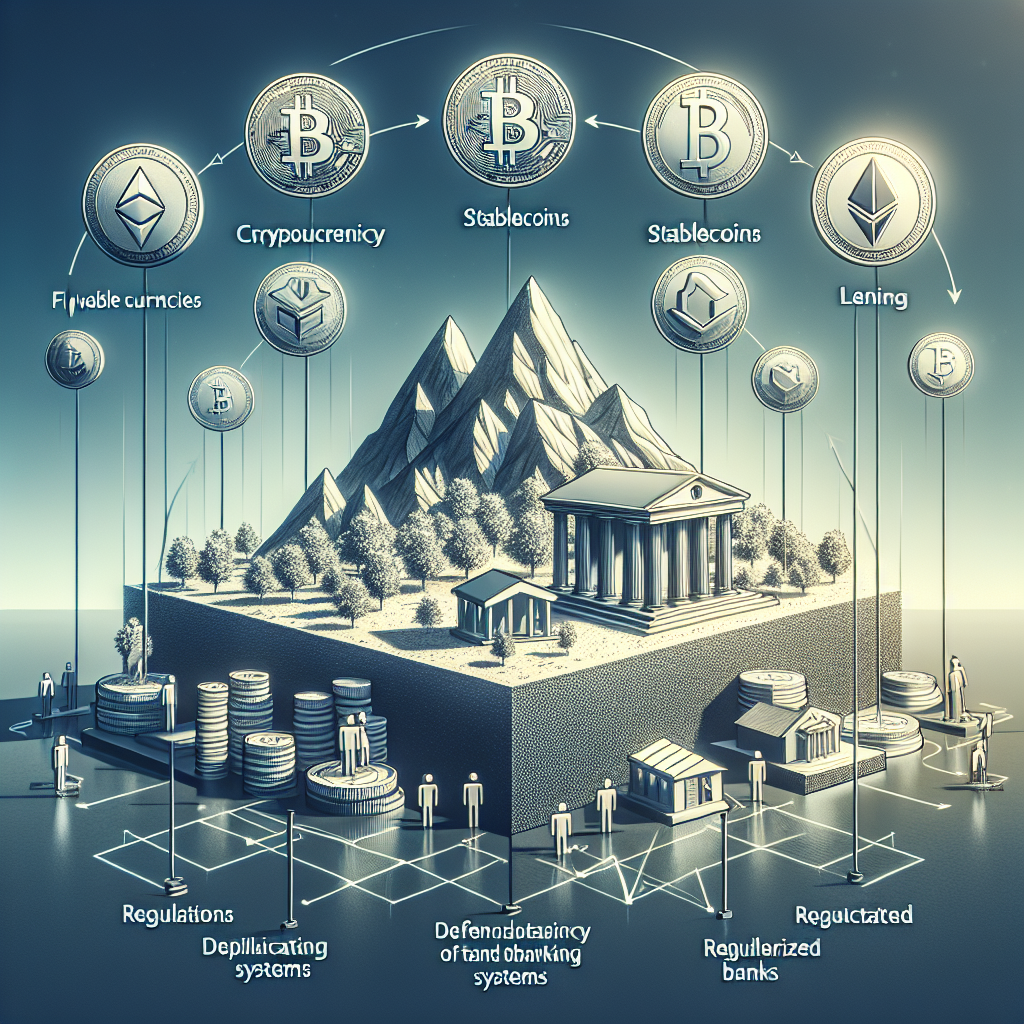 Analyzing how stablecoins are reconfiguring traditional banking systems, challenging the conventional financial landscape, and what it means for consumers and financial institutions alike.

Latest from Fin Tech Brief
- The Evolving Landscape of Cryptocurrency Regulations in the U.S.
- The Surge of Institutional Investment in Cryptocurrency
- Blockchain Beyond Cryptocurrency: Transforming the Financial Landscape
- Cryptocurrency's Current Rollercoaster: Insights from Recent Trends
- The Impact of Blockchain on Financial Institutions